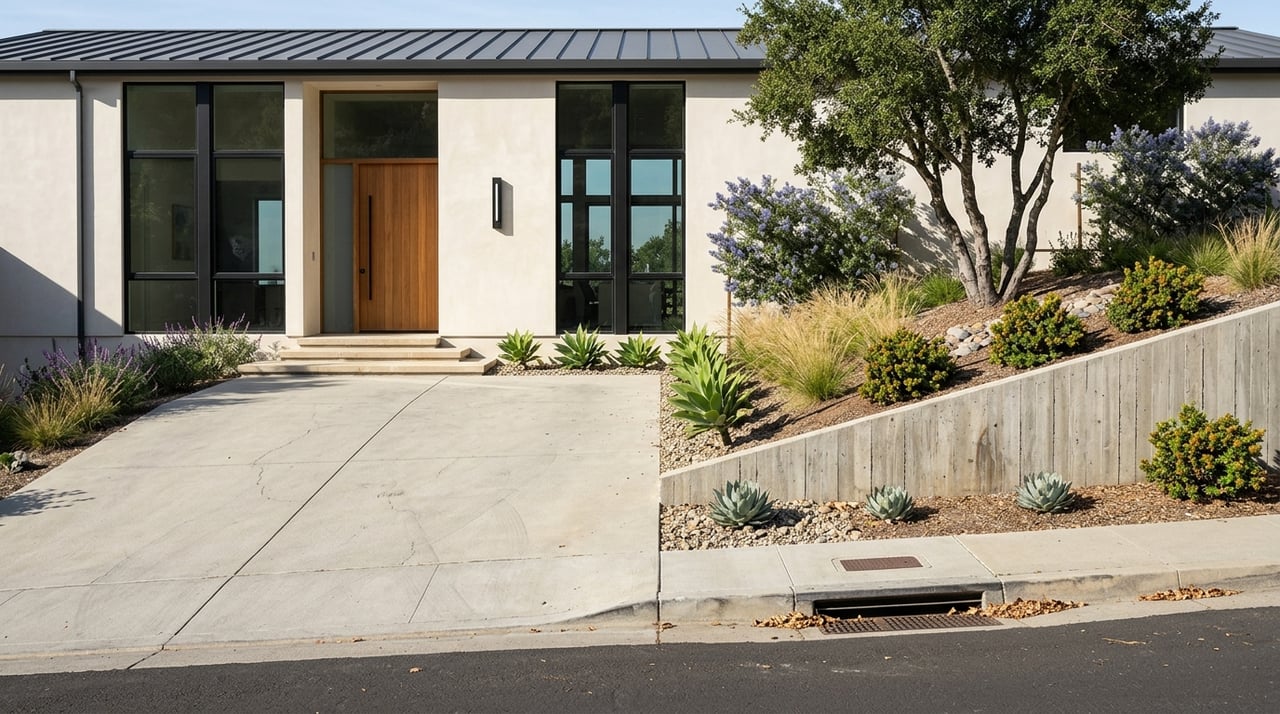
If you have been trying to make sense of the Malibu Hills luxury home market, you have probably noticed one thing right away: the numbers can seem all over the place. That is not a mistake. It reflects a market where land, rebuild opportunities, view estates, and hillside homes all sit under the same broad label. If you are buying or selling here, understanding what actually drives value can help you read the market more clearly and make better decisions. Let’s dive in.
Why Malibu Hills Data Looks So Mixed
Malibu Hills is not a neatly boxed-in public data category. Most public portals capture it indirectly, which is why the clearest public picture comes from looking at Malibu citywide data alongside nearby hillside benchmarks like Malibu Park.
That matters because each portal measures something a little different. Some focus on closed sales, some emphasize listing activity, and some use estimate-based pricing models. In a market as nuanced as Malibu Hills, those differences can create wide gaps in the numbers.
What Public Market Numbers Show
Malibu citywide, Redfin reported a median sale price of $4.02 million over the three months ending April 2026, with 103 median days on market. Zillow showed a typical home value of $3.23 million, 229 homes for sale, and a $3.66 million median list price. Realtor.com reported a $5.85 million median listing price, 510 homes for sale, 73 median days on market, and a 90% sale-to-list ratio.
Those figures are best viewed as different lenses, not contradictions. Redfin relies on MLS and public records, while Zillow’s value figure is estimate-based. In a hillside luxury market with a wide spread of property types, that distinction matters.
For the luxury-only slice of Malibu, Redfin showed 481 luxury homes for sale at a median listing price of $6.92 million. Most homes were on the market about 101 days, received about one offer on average, and only seven sold in the past month. That gives you a more focused look at the high-end buyer pool, even though it still reflects Malibu broadly rather than Malibu Hills alone.
Malibu Park Helps Frame the Hills
Malibu Park is one of the most useful public benchmarks for understanding hillside pricing. Zillow showed a typical value of $4.62 million, a $5.215 million median list price, and 17 homes for sale as of April 30, 2026.
Redfin showed a $5.21 million median sale price and 238 median days on market in Malibu Park, with only one sale in the latest three-month window. Realtor.com showed a much higher $8 million median listing price and 39 homes for sale, with 67 median days on market.
The sample is small, so these numbers are directional rather than definitive. Still, they support an important takeaway: hillside luxury can price above Malibu’s citywide medians while also taking longer to sell.
Why Prices Vary So Much
One reason pricing varies so widely is that Malibu Hills includes more than finished homes. Public search results can include vacant land, rebuild lots, entry-level hillside properties, and major estates with sweeping views. Those are very different assets, even if they appear side by side in the same search.
Current examples on Zillow’s Malibu Hills page include land offerings around $1.395 million, $1.65 million, and $2.495 million, alongside a home listed at $6.999 million. When inventory mixes land and homes, broad median figures become less precise.
That is why one fixed number rarely tells the full story here. A more useful way to understand the market is through price bands anchored by Malibu citywide data, Malibu luxury data, and hillside benchmarks like Malibu Park.
What Drives Malibu Hills Value
In the Malibu Hills, the physical site can matter as much as the house itself. Buyers are often evaluating not just square footage and finishes, but also views, access, topography, privacy, fire resilience, and septic feasibility.
That is one reason local knowledge matters so much in this part of Malibu. A home can look similar on paper to another listing and still have a very different value story once you study the lot, road approach, and development constraints.
Views and Visibility Matter
Views are one of the clearest value drivers in the hills. Malibu’s Coastal Program treats Pacific Coast Highway and canyon roads as scenic roads, and development standards aim to reduce visual impacts from scenic roads, public viewing areas, and ridgelines.
In practice, that means less-visible siting, reduced height and mass, limited grading, and designs that blend into the hillside can affect how a property is planned and perceived. For buyers and sellers alike, view quality is not just about what you see from the house. It is also tied to how the property fits its setting.
Topography Shapes Potential
Lot shape and slope are major factors in hillside value. Malibu’s hillside standards apply when a site includes slopes over 20%, and zoning districts can carry base lot sizes ranging from a quarter acre up to 20 acres, depending on the area.
On steeper sites, the code favors split-level or stepped-pad design, shorter driveways, and less grading. That can affect build cost, design flexibility, and resale appeal. In Malibu Hills, a beautiful lot is not always the same thing as an easy lot.
Access Is More Than Convenience
Access can have a major impact on both usability and buyer confidence. Malibu’s safety planning calls for two access points where practicable in fire hazard zones and requires private roads to be maintained for emergency access.
That makes details like road width, turnarounds, pullouts, and route quality especially important. In hillside areas, access is not just about daily convenience. It can shape how a property is evaluated from the start.
Architecture Is Broadly Mixed
Malibu is not a style-restricted market. According to a recent city agenda report, Malibu has no architectural review board or specific aesthetic requirements, and the housing stock includes Mid Century Modern, Contemporary Ranch, Mediterranean Ranch, Spanish Colonial, Arts and Crafts, Contemporary, Post Modern, and Board and Batten or Wood Shingle styles.
That mix creates room for a wide range of design preferences. It also means buyers tend to focus more on site quality, layout, and execution than on whether a home fits one dominant neighborhood style.
Why Listings Can Take Time
Luxury homes in Malibu do not always move quickly. Redfin described Malibu citywide as not very competitive, with homes selling about 6% below list on average.
In the luxury-only segment, most homes were on the market about 101 days. In Malibu Park, the benchmark was even slower at 238 median days on market, though that sample was very small.
A slower pace does not necessarily signal weak value. In Malibu Hills, it often reflects a narrower buyer pool and the fact that serious buyers are weighing site-specific issues carefully. When access, views, topography, septic, and fire-related diligence all matter, decisions can take longer.
Transaction Issues Buyers and Sellers Should Watch
The Malibu Hills market is shaped by more than aesthetics and comps. Several local transaction factors can affect pricing, timing, and resale.
Fire Risk Is Central
The City of Malibu states that all of Malibu is in a Very High Fire Hazard Severity Zone. The city also notes that residential sales are subject to AB 38 defensible-space documentation before close of escrow.
Beyond the sale itself, the city’s safety planning emphasizes fire protection plans, brush clearance, adequate ingress and egress, and hillside design that accounts for wildfire risk. In practical terms, fire readiness is part of the market conversation for nearly every Malibu Hills property.
Septic and Wastewater Review Matter
Septic status is another key issue. In Malibu, a new onsite wastewater treatment system requires a Coastal Development Permit first and then a septic permit, with review involving Environmental Health, Geology, Public Works, Los Angeles County Waterworks District 29, and Planning.
For buyers looking at land, rebuilds, or major upgrades, this can have a direct effect on feasibility and timeline. For sellers, clear documentation and a well-understood property profile can help reduce friction during due diligence.
How to Read the Market Wisely
If you are buying in Malibu Hills, avoid relying on a single headline number. Instead, compare citywide Malibu data, luxury-specific Malibu data, and relevant hillside benchmarks. Then go one step deeper and evaluate the property itself through the lens of views, access, topography, fire readiness, septic considerations, and overall permitability.
If you are selling, remember that pricing is only part of the strategy. Buyers in this market often need help understanding what makes a property special, feasible, and defensible in value terms. The more clearly that story is presented, the better positioned your home or land can be.
In a market like Malibu Hills, local context is not a bonus. It is essential. That is especially true when the property’s site conditions may matter just as much as the residence built on it.
Whether you are evaluating a view estate, a hillside home, or a land or rebuild opportunity, working with a team that understands Malibu’s terrain, process, and micro-markets can make the path much clearer. If you are ready to talk through your options in the Malibu Hills, connect with Bill & Daniel Moss.
FAQs
What is the best way to understand Malibu Hills home prices?
- The clearest approach is to look at Malibu citywide data, Malibu luxury-only data, and hillside benchmarks like Malibu Park together rather than relying on one price point.
Why do Malibu Hills listings vary so much in price?
- The market includes vacant land, rebuild lots, entry-level hillside homes, and large luxury estates, and public portals often group those different property types together.
Why do Malibu Hills luxury homes sometimes take longer to sell?
- Luxury homes in Malibu often have a narrower buyer pool, and buyers usually spend more time evaluating views, access, topography, fire-related issues, and septic feasibility.
What site features matter most in the Malibu Hills market?
- Views, lot shape, slope, access quality, privacy created by site layout, fire resilience, septic feasibility, and permitability are all important factors.
What should Malibu Hills buyers know about fire risk?
- The City of Malibu states that all of Malibu is in a Very High Fire Hazard Severity Zone, and residential sales require AB 38 defensible-space documentation before close of escrow.
Why is septic status important for Malibu Hills properties?
- Septic and wastewater review can affect whether a property is practical for a rebuild, expansion, or new system, and the local approval process involves multiple city and county reviews.